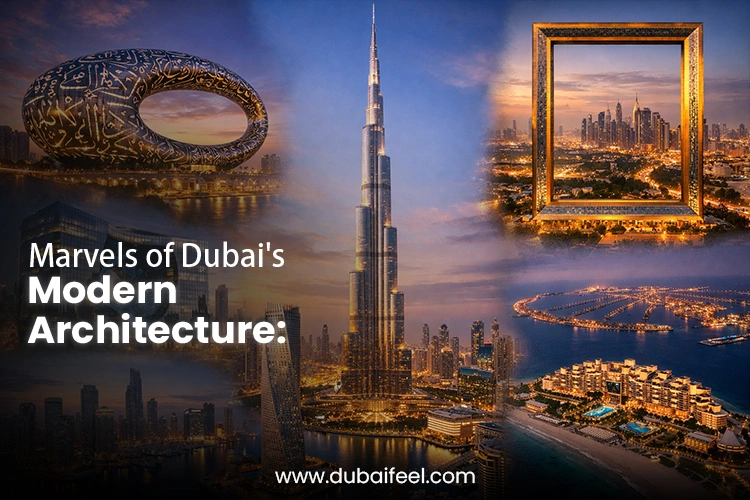

The contemporary buildings in Dubai are a spectacular combination of creativity, technology, and boldness. Once a tranquil desert land, the city has developed into a global metropolis of futuristic design, where engineering limits are challenged to the extreme. Every construction in Dubai boasts a tale of creativity. Skyscrapers create air flow, and modern-day cultural towers invigorate art, sustainability, and digital intelligence.
The architects of Dubai have marvelous work that is more than just buildings. They symbolize the advancement of the city and its mission to create otherworldly experiences. Through its eye-catching concepts and new construction techniques, this city exploits all limits. Thus, the most incredible things in Dubai are proof of what technology and creativity can do together. This introduction leads to knowing the amazing buildings in Dubai, which are a modern architectural work of art.
Also Read: Cultural Immersion in Dubai: How to Discover the City’s Rich Traditions and Heritage
Burj Khalifa: The Pinnacle of Modern Engineering
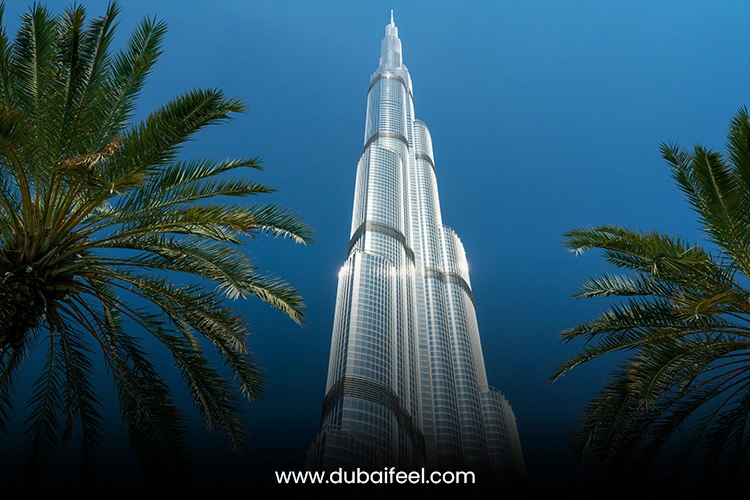
The Burj Khalifa, Dubai’s most iconic symbol of architectural daring, rises like a crystal spear into the desert sky. The tallest building in the world has also become a massive success of engineering and design innovation for the climate. The design of the building has taken inspiration from the Hymenocallis flower. It has a trilobed design. Moreover, this design helps to deflect strong winds. It is specially designed keeping in view the high winds of the desert area.
The engineers created a buttressed core system that allows for a high-rise building structure to be stable while also allowing more free space with less material use. As a result, they will last, last, and last even longer. Moreover, they are eco-friendly, like many mega-structures today. The tower uses technologies that control the climate inside so that it does not get too hot. Visitors will also be able to observe the clouds from above. The nightly LED spectacle at Burj Khalifa is impressive in both technology and geometry. The building is a human creation that offers artistic outcomes.
Museum of the Future: A Symbol of Innovation and Imagination
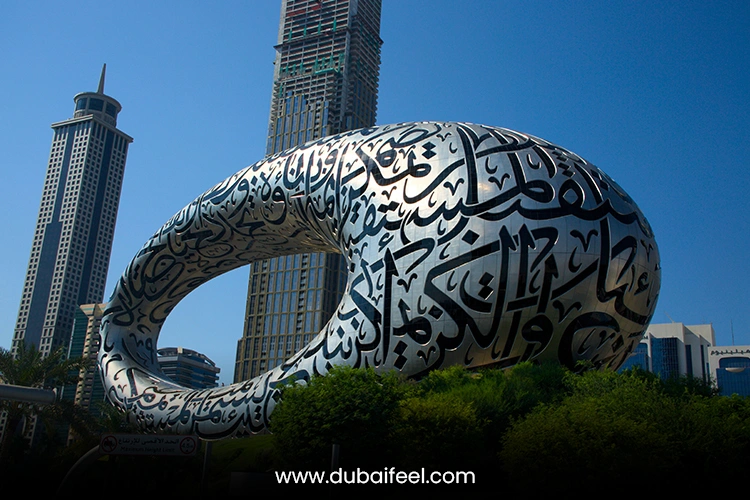
Museum of Future reimagines a contemporary cultural building that could really be. The torus-shaped design, along with graceful Arabic lettering, is different from standard architecture and shows innovation from Dubai. The structure is digitally fabricated. Manufacturing of the complex curves and unusual geometric shapes is done through parametric modelling, AI algorithms, and robotics-generated precision manufacturing. The seamless stainless steel skin of precisely 10,024 panels depicts the story of Tamil Nadu’s technological evolution.
The museum is a beautiful building. It is an ideas laboratory that makes the public dream of the future using artificial intelligence, interplanetary exploration, and ecological innovation. Their display is not the same as a museum exhibition. Their show is an exhibit that engages one’s curiosity. The Museum of the Future is more than a building. It contains creative ideas, sustainable actions, and humane progress.
Palm Jumeirah: A Manmade Wonder Visible from Space
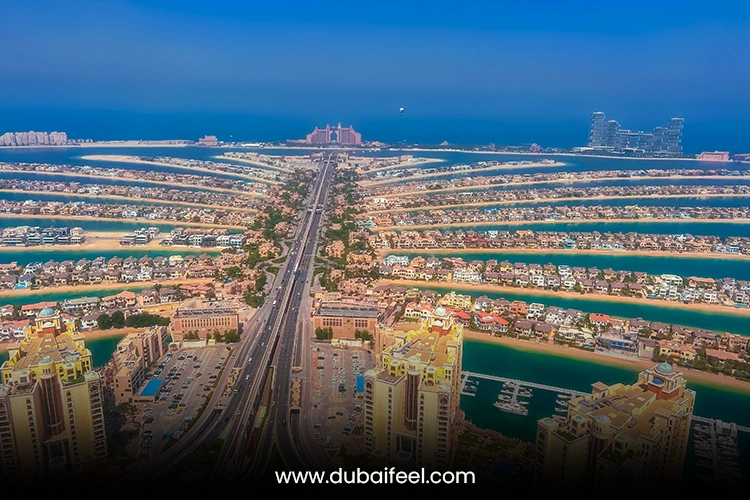
One of the most remarkable engineering feats of mankind in Dubai was the transformation of the open sea into a manmade palm-shaped island on the Jumeirah sea that can be seen from space. Shaped like a palm tree, the island was designed not to look pretty, but to ensure that maximum waterfront was accessible to the residents and hotels. The construction method employed zero-waste land reclamation techniques where millions of cubic meters of sand and rock were placed by means of GPS-controlled dredging systems.
The design of the breakwater is crescent-shaped, which absorbs sea wave energy, thus preventing long-term stabilization of an island. Underwater tunnels and marine sites underneath show that the city is concerned about development and environmental harmony. The Palm Jumeirah is a thriving luxury ecosystem today. World-class hotels like Atlantis The Royal and The Palm enhance their architectural and experiential depth and richness on this pioneering island.
The Opus by Zaha Hadid: A Fluid Masterpiece
Zaha Hadid’s Opus serves as a sculptural model for the infinite possibilities in contemporary architecture. The building turns its back on geometry and celebrates fluidity—the significant void acts as a molten liquid that passes through a cube. To achieve the final result, a whole lot of 3D modeling was needed. Every curve and angle was utilized and consists of two separate towers that are connected at the top and bottom in a very unusual way.
With the help of special glasses, the building facade responds to the sun with different intensities. During the day, it shimmers like crystal, and at night, it glows like a lighthouse. Inside, Hadid’s design philosophy continues. The organic interiors reflect the dynamism of the exterior. A union of engineering precision and artistic imagination, the Opus demonstrates Dubai’s status as a leading global incubator of architectural innovation.
Cayan Tower: The Twisting Marvel
One of the architecturally innovative structures of Dubai is the Cayan Tower. This tower features a remarkable 90-degree twist. The tower rises gracefully above Dubai Marina, and its shape gradually twists in profile by rotating the floor plate by 1.2 degrees, every staircase. As the building twists upwards, it gives a sense of awe. Moreover, depending on where you are standing, you will see the building differently.
Engineers carried out tests in wind tunnels and modeling to ensure that the twisting shape would remain strong against high coastal winds. The front of the building uses panels that shade the sun. This stops the heat and saves a lot of energy. It also gives stunning views of the marina and the sea. The Cayan Tower is unique in the sense that no elements are repeated; every floor has been treated as an element. The effect is a dynamic skyscraper that marries functional invention with artistic ambition and solidifies its place among the most remarkable modern buildings of Dubai.
Dubai Frame: Connecting the Past and the Future
The Dubai Frame symbolizes the linking of the city’s past with the future that the city aspires to. Standing at a height of 150 meters, its monumental rectangular shape literally and figuratively frames contrasting views of old and new Dubai from each side. As one goes higher and up to the top sky deck, the views gradually change from the old souks and heritage areas to futuristic skyscrapers and manmade landscapes. The golden ratio primarily dictates the proportions of the structure.
The bright light reflections off the gold stainless steel cladding of the landmark allow it to be visible from a distance. Furthermore, with a glass floor, the skywalk provides the visitors with a unique experience – walking over the city, looking down at the world. Sustainability is key to the Frame’s engineering and energy efficiency, integrating intelligent climate controls into its entire design. The Dubai Frame is a cultural monument that tells the story of Dubai, which treasures its past while hastening towards the future.
Atlantis The Royal: The Epitome of Ultra-Luxury Design
Atlantis The Royal is a remarkable statement of luxury and new architecture. The design of Nakheel Tower creates an eye-catching shape along the Palm Jumeirah. It is designed as a vertical city of blocks that are stacked and interconnected. Every “block” acts as a modular unit, creating open-air walkways, suspended gardens, and sky bridges through which light and air can pass freely. The architecture’s indoor and outdoor philosophy improves ventilation and offers exciting views of the Arabian Gulf.
At the resort, the water features are designed with advanced flow dynamics. Plus, there will be synchronized jets that offer displays of light, mist, and sound. Through these jets, water will make music and dance. Infinity pools perched at dizzying heights, at times hundreds of feet in the air, offer unforgettable vistas that reinforce the project’s experiential luxury spirit. The interior uses luxury materials and contemporary art, along with architectural elements inspired by the sea. It is not just a hotel, but a breathtaking display of design excellence, sensory experiences, and futuristic engineering that sets a new standard in ultra-luxury architecture.
Summary: Dubai’s Skyscape Is a Colorful Canvas
The skyline of Dubai is ever-evolving and an architectural masterpiece that the city strives to build. Every single structure is designed against the conventions with a spirit of defiance in Dubai. Instead, it fosters innovation and merges artistry and engineering to create visionary, yet practical spaces. The skyline gets decorated while narrating a story of ambition, resilience, and futuristic foresight.
With urban expansion taking place in Dubai, we see new typologies being proposed that break new ground in sustainability, technology, and aesthetics. The skyline of Dubai is a constantly changing space that promotes innovation while maintaining cultural identity. In the coming decades, Dubai will be defined as the architect of modern architecture for the transformation of the urban landscape that will be globally acknowledged.