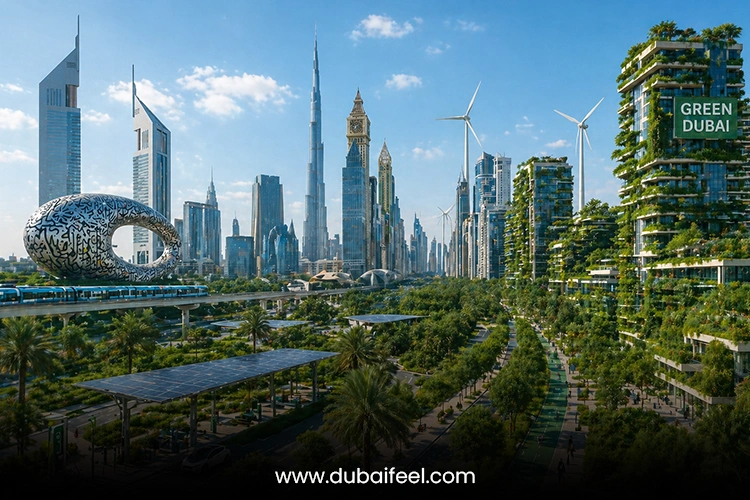

The city of Dubai, traditionally associated with wealth, architectural brilliance, and high-speed urbanization, is changing radically. The city is gradually becoming a leader in sustainable tourism despite its glittering skyline and image of luxury. With the growing concern of climate change spreading across the globe, Dubai has now begun to redefine itself; no longer the embodiment of luxurious consumption, but an example of environmental accountability.
This transformation is not a cosmetic act; it has a policy base, innovation, and long-term vision on environmental stewardship. Renewable energy projects, green-friendly hospitality, etc., Dubai is transforming the concept of a sustainable tourist destination. This article discusses how the city is chiseling its way to a green tourism destination in the Middle East.
Also Read: Unusual Museums in Dubai: Hidden Cultural Gems Beyond the Skyline
Visionary Policies Driving Sustainability
The process of making Dubai sustainable is pegged on radical government policies and developmental strategies. The fundamental element of this change in Dubai is the intensive desire to minimize carbon emissions, save on natural resources, and increase the awareness of the environment in all sectors.
Clean energy programs and green building policies in Dubai are some of the programs that have formed the basis of a more sustainable urban setting. These policies favor renewable energy, energy-efficient construction, and environmentally sustainable urban development. The developers in Dubai have already been made to comply with high environmental requirements so that the new projects do not conflict with the long-term ecological vision of the city.
Moreover, the tourism planning of Dubai is becoming more and more based on sustainability. The government of Dubai is actively encouraging the use of environmentally friendly attractions and responsible tourism experiences, which makes the city a destination that is both luxurious and environmentally friendly. This policy is congruent with tourism and has been influential in transforming the world’s image of Dubai.
Renewable Energy and Green Infrastructure
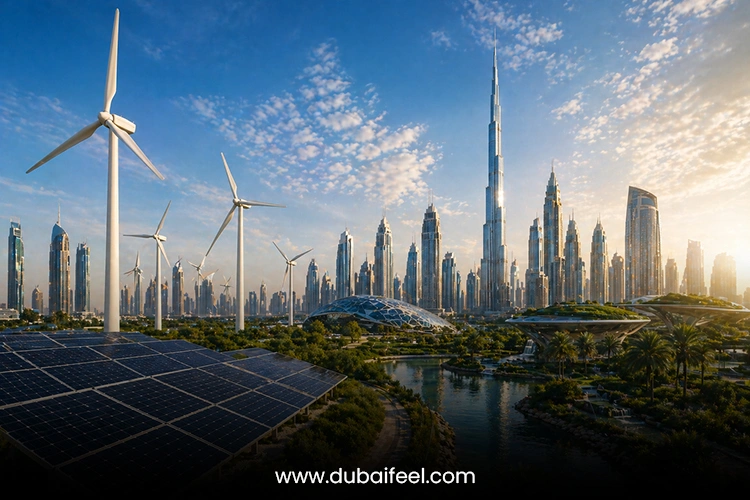
Among the most important things about sustainability in Dubai is the fact that it invests in renewable energy and green infrastructure. The city has gone an extra mile in the exploitation of solar power, whereby it has used the rich sunlight to produce clean energy.
The massive solar farms and energy-efficient constructions are becoming the order of the day, cutting down the use of fossil fuels and minimizing environmental harm. Transportation infrastructure is also improved in order to encourage environmentally friendly mobility, and metro lines, electric buses, and cycling tracks are helping residents and tourists embrace greener commuting patterns.
Another important element of this change is green spaces. Sustainable landscaped parks, urban fronts, and waterfronts are being planned, and native plants and water conservation technologies are being considered. Such areas not only improve the beauty of the city but also increase the biodiversity and improve the air quality.
Eco-Friendly Hospitality and Tourism Experiences
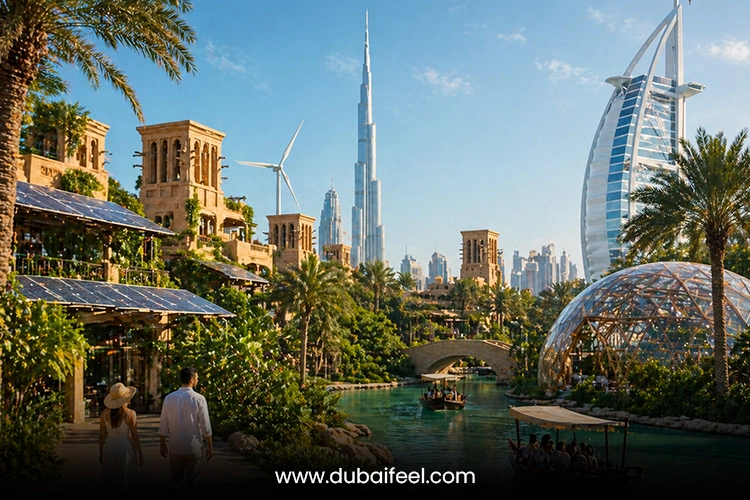
The Dubai hospitality sector is playing a significant role in its movement towards sustainable tourism. Hotels and resorts in Dubai are increasingly aware of the environment, with attention given to energy saving, waste minimization, and sustainable sourcing of materials and food.
Elimination of single-use plastics, installing water-saving fixtures, and using renewable sources are some of the measures implemented by many establishments in Dubai. Dubai also asks its guests to engage in sustainability programs that will foster responsible consumption and environmental awareness.
In addition to accommodation, more and more green experiences are being provided in Dubai. The conservation reserves, wildlife reserves, and nature-based activities in Dubai enable visitors to interact well with the environment in a responsible manner. These experiences are well controlled and least disruptive to the ecological setting, and also they are educative.
This sustainable tourism in Dubai is an indication of a wider trend in the world where tourists are increasingly demanding meaningful and greener travel experiences.
Waste Management and Circular Economy Initiatives
A successful waste management system is one of the pillars of a sustainable city, and Dubai is going in the right direction in this regard. It is also investing in high-level recycling facilities and waste-to-energy technologies in order to ensure that the city will be less dependent on landfills and will become a closed economy.
Residential, commercial, and tourism are also undergoing expansion of the recycling programs, which promote segregation and reuse of materials. Creative solutions are also being considered to convert waste into energy, which will offer a twofold advantage of waste reduction and the generation of energy.
These efforts are important in terms of public awareness campaigns. The population and tourists are informed on how to dispose of waste in a responsible way and the need to be sustainable. Dubai is making sure that its sustainability programs are promoted at all levels of society by promoting a culture of environmental responsibility.
Balancing Luxury with Environmental Responsibility
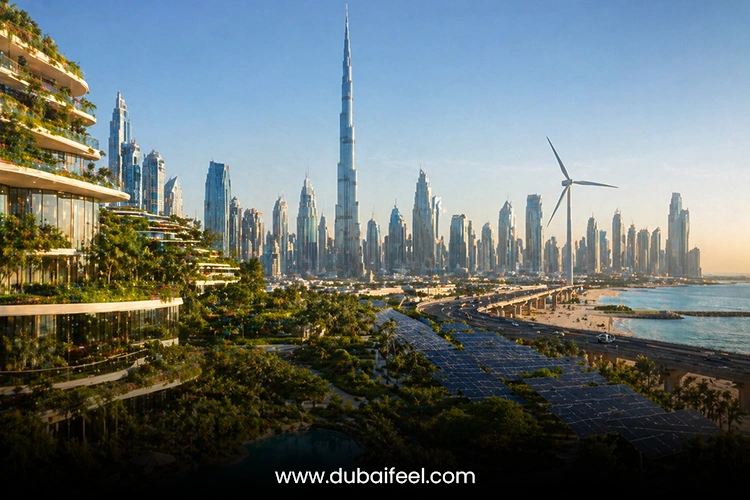
The most impressive thing about the green transformation in Dubai is that it balances luxury and sustainability. The city has shown that it is not necessary that environmental responsibility be at the cost of comfort and sophistication.
Luxury resorts are integrating sustainable design aspects without sacrificing the beauty and services. Premium experiences are also being reinvented to meet the ideals of eco-friendliness and provide guests with the best of both worlds. This strategy counters the long-standing belief that sustainability is a sacrifice, and it is now established that sustainability can augment the total travel experience.
The capacity of the city of Dubai to incorporate sustainability in its luxury services makes it a one-of-a-kind destination. It targets a younger generation of passengers who are conscious of indulging and conserving the environment.
Conclusion
The adaptability and vision of Dubai have helped the city to become a sustainable tourism hub. The city is also leading the way to a more responsible and resilient future by adopting renewable energy, enacting visionary policies, and reinventing its tourism industry.
This is an ongoing process, but the current progress that has been made is impressive and inspiring. Dubai does not just react to the environmental issues on a global level: it is proactively creating the discourse of sustainable urban development and tourism.
To the travelers, it implies the possibility of having a destination that is mindful as well as magnificent. With Dubai being an ever-changing city, it remains a strong point on how cities can integrate development, opulence, and sustainability in the contemporary world.