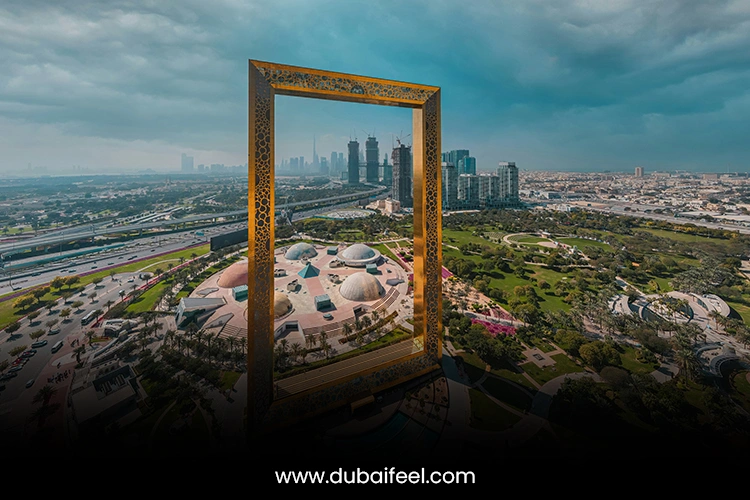

In the last 20 years, Dubai has metamorphosed from a small trading port to one of the most powerful tourism hubs in the world. The city boasts of a futuristic skyline, five-star hospitality services, and cultural diversity, which are still in the process of development with the help of visionary planning and ambitious government development plans. With the world shifting towards being more digital, sustainable, and experience-based in the tourism sector, Dubai is leading the change.
The leadership of Dubai has already introduced several strategic plans that will help it boost the tourism industry and guarantee sustainable economic development. The city is consistently recording its own records of tourism in recent years, and the number of international tourists visiting the city has grown in millions every year. The city continues to gain global influence. Indicatively, Dubai was getting around 19.59 million international visitors in the year 2025, following three consecutive years of record growth.
In the prospect of 2030, Dubai is providing a future-thinking tourism plan, which will be constructed on sustainability, innovation, development of infrastructure, and digitization. The idea behind these initiatives is to ensure that it has developed a tourism ecosystem not only resilient but also one that is able to redefine the world travelling experience.
Also Read: Adventure Awaits: Top Outdoor Thrills to Experience in Dubai
A Strategic Vision: Dubai’s Tourism Goals for 2030
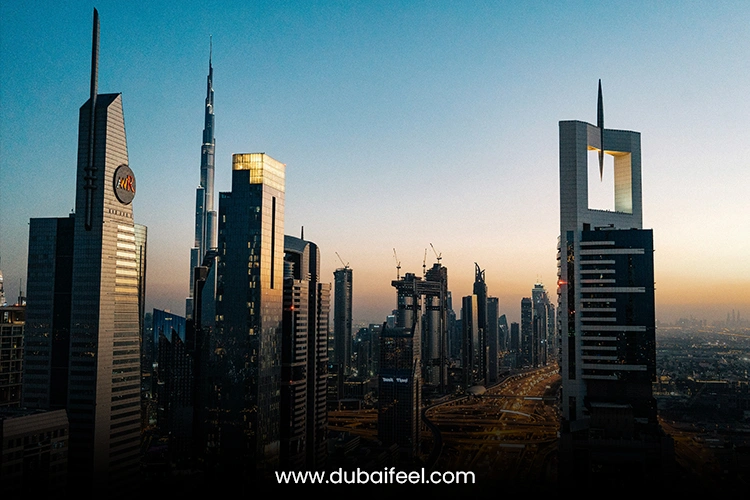
The long-term tourism strategy of Dubai is directly connected to the Dubai Economic Agenda (D33) as well as national tourism objectives that would make Dubai popular and competitive internationally. Such plans focus on innovation, sustainability, and diversification of the economy, which makes tourism a key component of the future economy. Dubai, according to its official projections, is planning to receive approximately 25 million visitors a year by 2030 and to raise the contribution of tourism to its economy tremendously. The city also intends to increase its hospitality industry and provision to about 200000 hotel rooms, which will offer a more spacious capacity to carry worldwide passengers.
These are quite ambitious goals, which are aided by massive investment in infrastructure, advertising, and international liaisons. The government is in close partnership with the stakeholders of the non-government sector to ensure that the development of tourism is sustainable and innovative. The final goal is not necessarily to receive more tourists but to turn it into one of the three best places to be in the world in terms of leisure and business tourism, so that it can provide the best visitor experience.
Smart Tourism: Integrating Technology into Travel Experiences
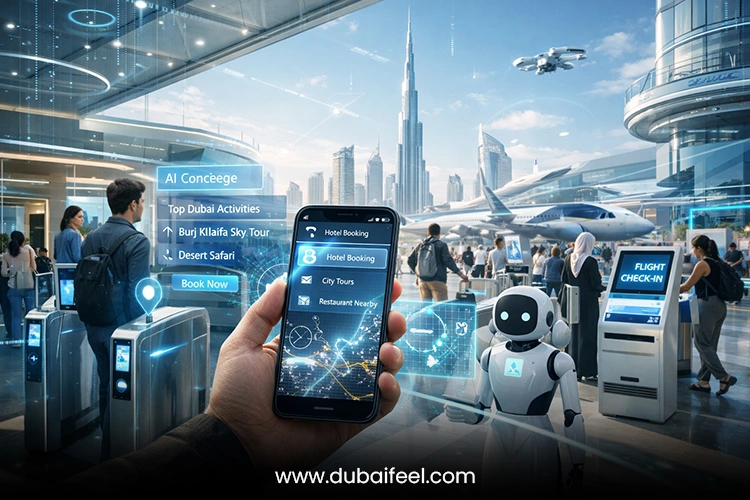
The ability to become one of the most technologically advanced destinations in the world is one of the most remarkable characteristics of the tourism strategy of Dubai. The city is undergoing the integration of smart tourism technologies into its infrastructure, which improves the level of convenience, efficiency, and personalization for tourists. The enhancement of the tourism services in the city is already underway through the use of artificial intelligence, big data, and the Internet of Things (IoT). Intelligent hotel systems, AI-driven concierge services, and frictionless digital check-in will enable guests to enjoy frictionless hospitality. Mobile apps allow tourists to organize their plans and reserve experiences as well as explore the city more easily than ever.
Dubai airports are also transforming to become very advanced travel centers. One of the busiest aviation hubs in the world, Dubai International Airport processed more than 95 million passengers in 2025, which indicates the extent to which the city offers global connectivity. In an effort to meet the demand in the future, it is developing Al Maktoum International Airport. This is a large-scale project of infrastructure that will facilitate the long-term tourism goals of the city and also allow the movement of millions of tourists per year. The goal of Dubai is to develop an uninterrupted and digitally enhanced ecosystem of tourism through high-end technologies incorporated into the travel services by 2030.
Sustainable Tourism: Building a Greener Travel Destination
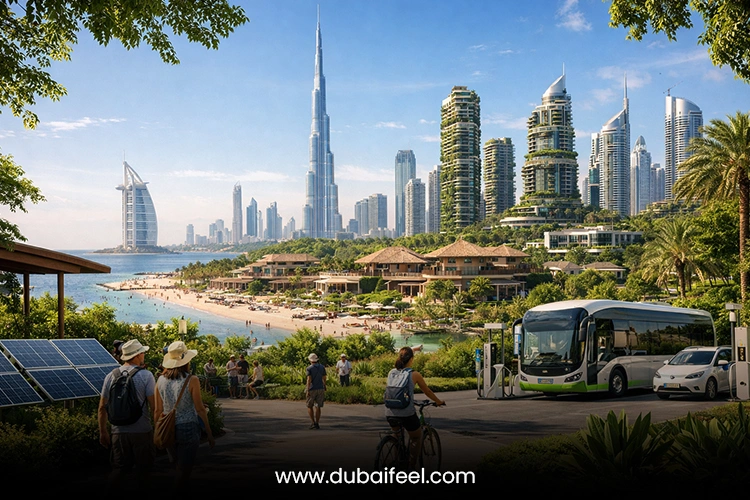
With environmental issues getting high on the agenda of international tourists, sustainability is now a principle of tourism in Dubai. The city understands that the successful realization of long-term tourism has to be sustainable in terms of economic development and environmental accountability. The Sustainable Tourism program of Dubai urges hotels and tourism enterprises to embrace environmentally friendly practices. The Dubai Sustainable Tourism Stamp is one of the examples where hotels that meet strict sustainability criteria receive recognition. These standards include:
• Energy efficiency measures
• Water conservation systems
• Waste reduction programs
• Sourcing responsibly.
Moreover, the long-term sustainability plans of Dubai coincide with the UAE Net Zero 2050 plans, according to which the carbon emissions in various industries should be reduced significantly. Urban planning activities are also aiding sustainable tourism. The Dubai 2040 Urban Master Plan aims at doubling green and recreational space, maintaining cultural heritage, and enhancing the quality of the environment throughout the city. Much of green tourism is expected to be featured by the introduction of nature reserves, coastal conservation zones, environmentally friendly eco-tourism sites, and even more in 2030.
Expanding Attractions and Tourism Infrastructure
One of the most significant parts of the tourism strategy in Dubai is infrastructure expansion. The city is constantly reinvesting in the new attractions, entertainment areas, and cultural sites that will lead to the improvement of the visiting experience. Luxury resorts, waterfront construction, theme parks, and entertainment complexes are being constructed to attract tourists with different backgrounds. The further diversification of tourism services provided in Dubai will happen due to new island developments and hospitality projects, which will serve as a strong guarantee of the city as a luxury destination.
There is also an expansion in dramatic ways of public beach projects. It has plans to expand the overall number of public beaches by 400 percent by the year 2040 to create additional recreational amenities for locals and tourists visiting the city. The city is also targeting cultural tourism through conservation of historical areas like Al Fahidi and by encouraging museums, art galleries, and heritage experiences. This approach will make sure that the Dubai brand goes beyond the high-end malls and skyscrapers to the cultural authenticity and historical discovery.
A Global Events Hub: Tourism Through Entertainment and Business
The second pillar that the tourism industry in Dubai has is that it hosts world-class events, conferences, and festivals. Events The events calendar in Dubai has drawn millions of visitors each year, with international trade exhibitions and cultural celebrations being among them. Mass events like international business conferences and sporting events, entertainment festivals, cement the reputation of the city as a high-end leisure and corporate destination. The events boost economic activities in various industries, among which are hospitality, retail, transport, and entertainment.
The strategic geographical location is also a boost towards making it an international meeting point between the Eastern and Western. The city has direct flights to hundreds of destinations around the world, and thus it acts as a convenient airport for travelers and business people globally. By the year 2030, it is expected to enhance its status as a global events capital and provide immersive experiences that integrate business, entertainment, and cultural experiences.
Inclusivity, Accessible Tourism, and the Rise of Influencer Tourism
An inclusive and accessible nature is also a part of the future tourism plan of Dubai. The city has made efforts to make sure that the travelers are in a position to experience a comfortable and welcoming stay. A successful one includes making Dubai the first Certified Autism Destination in the Eastern Hemisphere, having thousands of tourism professionals pursuing training to serve visitors with sensory sensitivities. Such programs show the interest of the city in inclusive travel.
The availability of convenient infrastructure, facilities that are friendly to people with disabilities, and the presence of diverse cultural tourism products make it possible to have a wide range of travelers with diverse backgrounds and abilities represented in Dubai. This is an inclusive strategy that not only boosts the international profile but also widens its tourist market by facilitating the travel of more people.
Digital media and influencer marketing are also new ways of tourism promotion pioneered by Dubai. The city has realized the strength of social platforms; therefore, it has introduced programs where content creators are trained to market Dubai as a tourist destination. These initiatives are meant to create visually appealing digital content to bring out the charm of the attractions, culture, and lifestyle of Dubai. The use of influencers and social media narrative helps Dubai connect more with younger audiences and emerging travel markets. The digital marketing strategies are instrumental in keeping Dubai visible all over the world and one of the most discussed destinations in the world.
The Future of Travel in Dubai
As Dubai heads to 2030, the city is gradually redefining itself as a prototype of the future of the tourism industry. The long-term vision behind the city’s strategic investment in technology, sustainability, infrastructure, and cultural development is far more insightful than conventional tourism planning. As Dubai aims to increase its number of visitors, continues to grow its tourism industry record-breaking-fast, and has some of the most innovative projects in its urban development, the city tends to expand the range of what a modern-day tourist destination is capable of accomplishing. Its capacity to merge innovativeness and hospitality will make the visitors not only visit a city, but a highly-regulated setting that will inspire, entertain, and bring together people globally.
The future projections of tourism in Dubai show a great combination of visionary leadership, technological innovation, and long-term planning. The city is also defining a model of tourism that other destinations can eventually replicate by incorporating intelligent technologies, growth of tourism facilities, and encouraging the spirit of eco-tourism.
This movement toward 2030 is not merely a question of influx in the numbers of visitors to the country, but it is also a question of how tourism might be re-imagined in the 21st century. Having aggressive plans and a constant focus on innovation, Dubai is establishing itself as one of the most dynamic and progressive travel destinations across the globe. To both travelers, investors, and those working in the tourism sector, the message is very clear that the future of tourism is already being shaped in Dubai.