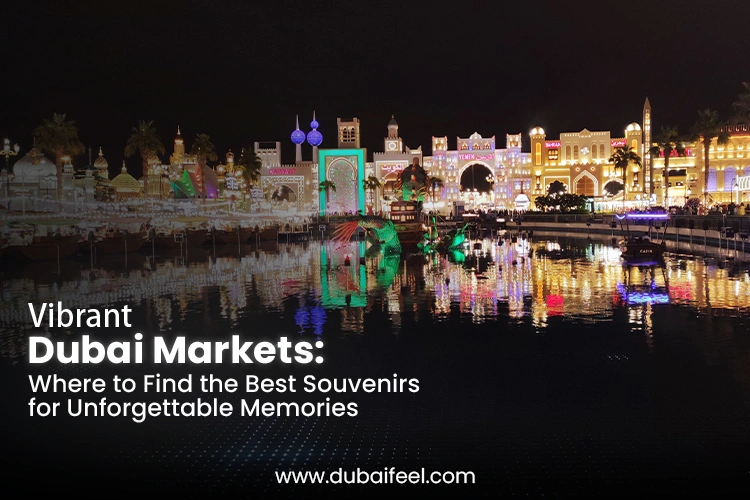

Dubai is a place where business is not just a matter of dealing but an art, and the most expressive form of it can be seen in its colorful traditional markets. The luxury malls with the shining fronts create a bustling introspection of the centuries-old trading tradition of the emirate. These markets are happy repositories of culture, in which the smell of spices, the pomp of precious metals, and the sophisticated beauty of artisanal products blend together. Visiting markets in Dubai is not only a way to buy something as a souvenir, but a full-fledged tour of the soul of the city, the one that was formed by Bedouins, maritime commerce, and the world trends.
Every alley has something with a sense in it: scented oils of oud, finely woven fabrics, exquisite jewelry, and decorative artisanship, each one of which speaks of the art and the culture of the exchange. To those tourists interested in obtaining something more than a mere copy-and-paste souvenir, the markets of Dubai provide an unprecedented chance to capture memories in a physical form and make every purchase a memorable story of discovery.
Also Read: Dubai’s Wild Side: Top Wildlife Experiences You Can’t Miss
1. The Allure of Dubai’s Traditional Markets
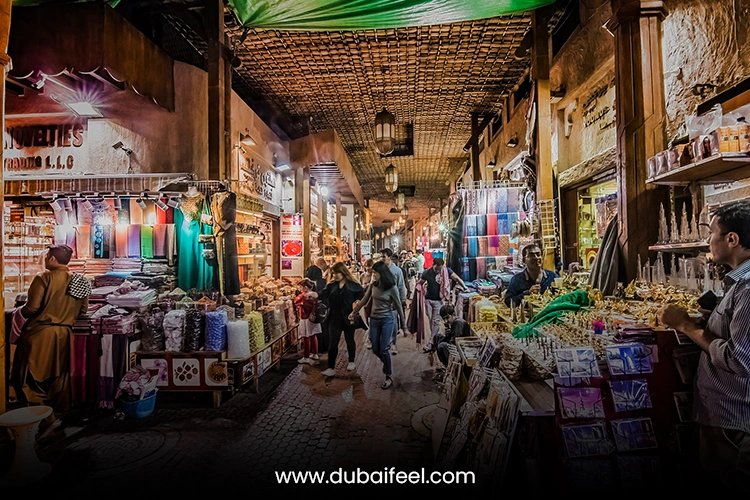
The historical and cultural basis of Dubai is Islam, and the traditional markets in the city are popularly called souks. Many years before Dubai became a world city with glass skyscrapers and upscale shopping streets, these markets already existed as fundamental trade routes connecting Asia, Africa, and Europe. Previously, merchants used to congregate here with spices, pearls, textiles, and precious metals, establishing the image of Dubai as the intersection of civilizations.
The souks continue to hold on to this tradition to this day and give visitors an authentic glimpse of the mercantile and multicultural development that has gone into the emirate. Their small streets, wooden fronts, and vibrant interactions produce the ambiance that is reminiscent of the ancient caravans and trade routes on the sea.
The event of shopping in the markets of Dubai is beyond just buying something and becomes a very enriching cultural experience. All senses are involved since the visitors go through spice clouds of air, see the brightness of gold that is polished under warm lights, and touch silk and cashmere in their hands. It has a rhythmic conversation between the buyer and seller, which is interactive and turns shopping into a social experience. The art of negotiation is not only promoted but also honored, and the travelers will be able to experience the localized culture and discover the peculiar treasures with a sense of meaning and historical value.
2. Gold Souk: A Glittering Treasure Trove
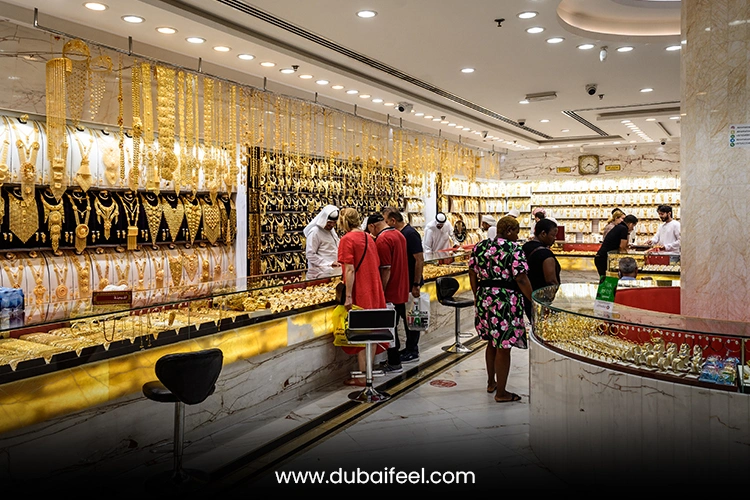
The Dubai Gold Souk of the old area of Deira is one of the most popular jewelry markets in the world. Being the home to hundreds of retailers, this glittering enclave is blazing with extravagant gold, platinum, diamond, and rare gemstone showcases. The market is also attractive because of its visual beauty, but also with regard to its perceived transparency and worth. Having prices usually pegged to the daily gold rates and low tax, The Gold Souk appeals to the collectors, investors, and even travelers who want heirloom quality souvenirs that represent the luxury and craftsmanship of the culture.
The market is dominated by traditional Arabic bracelets and bangles with their elaborate patterns and symbolic motifs as a carryover of centuries of Middle Eastern crafts. Gold coins and pendants provide an elegant combination of emotion and investment worth, and bespoke gemstone rings and necklaces enable the visitor to take home a personalized statement of opulence adorned with sapphires, rubies, or emeralds. Close comparisons of the shops and checks on authenticity bring the process of buying to the next level of informed sophistication.
3. Spice Souk: An Aromatic Wonderland
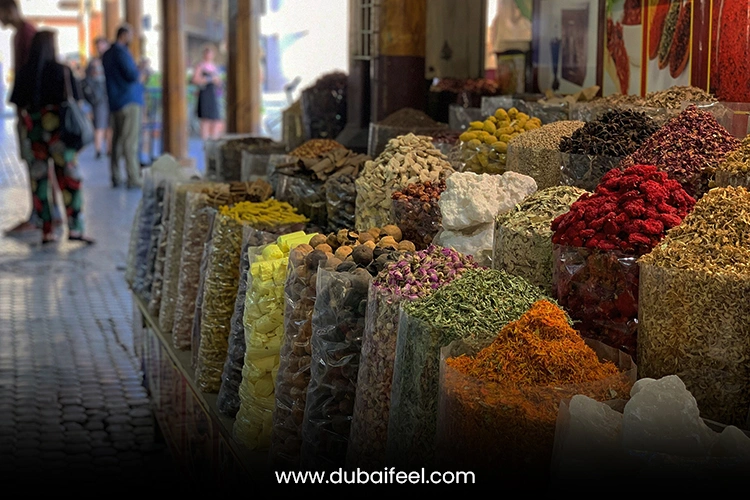
The contrast between The Spice Souk and the glory of gold is overwhelming. One has to be intoxicated by a combination of aromas and colors that overwhelm the visitors of the Spice Souk. The stalls are lined with mounds of cumin, cinnamon, turmeric, and dried rose petals, which turn into a visual and olfactory mosaic that reminds one of the Dubai food traditions.
This is not a marketplace but a feast of ingredients, tradition, and hospitality that has become inseparable in the Arabian culture. The spice mixtures are exotic, which is one of the reasons why they can help travelers to recreate the cuisine of the Middle East long after they have completed their journey. Saffron thread is one of the most valued and luxurious food items to be used as a souvenir.
The use of herbal teas and the traditional incense translates the spirit of Arabian warmth into gifts that will remind you of the comfort, ritual, and essential sensual pleasures. In addition to being a food marketplace, the Spice Souk is a living laboratory of cross-cultural interaction and knowledge of the ancestors. Sellers frequently have tales of how their spices came to be, what medicinal value the spices have, and how they are traditionally used, which may be a generation-old oral history.
This one-on-one experience makes an ordinary purchase something significant and enriches the experience of a visitor with the Arabian culture. The colorful bags of spices, neatly stacked according to their color and texture, are a symbol of the centuries of trade that used to bring desert caravans to the foreign continents. Consequently, the experience of going to the Spice Souk is an olfactory experience into the past, where the scent and the memory are united to form a long-lasting impression of a rich cultural heritage of Dubai.
4. Souk Madinat Jumeirah: A Modern Twist on Tradition
Souk Madinat Jumeirah is a sophisticated re-creation of the traditional Arabian market, perfectly fusing classical design and modern sophistication. The souk is surrounded by calm waterways and shaded walkways, wind towers, stone archways, and wooden balconies that all symbolize the architectural beauty of the old Dubai.
This destination is markedly different from the traditional markets where the visitors are encouraged to walk at a slow pace and be absorbed in the balance between the craftsmanship and the luxury. The smooth flow of abras down the canals and the view of the Burj Al Arab at a distance contribute to the mood, making shopping a relaxing cultural experience and not a rush.
Souk Madinat Jumeirah is a heartening maze, filled with a significant number of crafty shops and select stores. Ceramics and pottery are painted manually and feature elaborate designs, which are inspired by the local traditions. In contrast, designer scarves and pashminas demonstrate the blend of fashion trends all over the world and the Middle Eastern luxurious style.
Luxury perfumes and oud perfumes will be popular with customers who wish to have olfactory souvenirs that are reminiscent of Arabian taste. The modern home decor items also add an even higher value to the shopping experience and provide the traveler with well-designed souvenirs that, at the same time, are both traditional and modern. Souk Madinat Jumeirah has its beautiful canals that are reminiscent of Venice, and this provides numerous backdrops for memorable travel photographs.
5. Global Village: The Ultimate Multi-Cultural Bazaar
Global Village is one of the most ambitious cultural spectacles in Dubai that turns shopping into a worldwide festival. It has dozens of international pavilions and is open seasonally (November to April), with each being a representative of a particular country or region. Tourists are ferried across continents within the same evening, and they are exposed to varying cultures in terms of architecture, performances, and crafts. Global Village is more of a living cultural exchange marketplace, where unity is all about diversity, and where there is rare access to genuine international craft.
Whether it is a delicate Asian handcrafted textile or an African mask and artifact, the variety of souvenirs is a testament to excellent craftsmanship and cultural richness. Persian carpets and kilims are also a favorite among collectors due to the complex patterns of weaving and the symbolic images, and the traditional garments of Europe, India, and other regions offer viable ways of displaying the heritage. Each purchase is a cultural object with the artistic identity of its origin. Live entertainment, cultures, and international foods all under one roof, so it is not a market, but a global party.
6. Al Fahidi Street Market: Authentic Emirati Crafts
Global Village is one of the most ambitious cultural spectacles in Dubai that turns shopping into a worldwide festival. It has dozens of international pavilions and is open seasonally (November to April), with each being a representative of a particular country or region. Tourists are ferried across continents within the same evening, and they are exposed to varying cultures in terms of architecture, performances, and crafts.
Global Village is more of a living cultural exchange marketplace, where unity is all about diversity, and where there is rare access to genuine international craft. Whether it is a delicate Asian handcrafted textile or an African mask and artifact, the variety of souvenirs is a testament to excellent craftsmanship and cultural richness.
Persian carpets and kilims are also a favorite among collectors due to the complex patterns of weaving and the symbolic images, and the traditional garments of Europe, India, and other regions offer viable ways of displaying the heritage. Each purchase is a cultural object with the artistic identity of its origin. Live entertainment, cultures, and international foods all under one roof, so it is not a market, but a global party.
7. The Perfume Souk: A Fragrant Treasure Chest
The role of perfume in the Arab culture is very symbolic as it implies hospitality, charm, and personal identity. In Dubai, the Perfume Souk represents such a cultural obsession, and it provides a complete experience in the art of making perfume. On their way down its narrow aisles, the visitor stumbles over shelves of exquisite glass bottles of attars, oud oils, and rare essences, procured in every corner of the territory.
The master perfumers artfully combine ingredients in old age techniques wherein raw oils are scented into sweet smells that stay long after taking off. Every fragrance speaks of lifestyles, desert sceneries, the ritualistic culture, and the ancient grace of Arabian history.
The jewel of the Perfume Souk is pure oud oil, which has a rich smoky depth and is associated with affluence and status. Tailor-blended perfumes will be a more intimate gift that will enable the visitors to cooperate with the perfumers, creating the scent that reflects their personalities and the memories of Dubai.
The experience is finished with incense and bakhoor, which are traditional fragrances to perfume homes and clothing during events and celebrations. The smells of Arabian warmth and class are gathered in these aromatic souvenirs in their purest form. The sizes of fragrance bottles differ in cost; you have to shop around to get the right combination of quality and price.
8. Textile Souks: A Tapestry of Colors and Fabrics
The textile souks of Dubai are places that show a meeting point of color, touch, and tradition. These colorful markets exhibit a phenomenal assortment of fabrics, not only of the classic Emirati fabrics but also of modern designer fabrics that are imported and bought all over the world. Silk, satin, cotton, and chiffon roll-outs adorn the fronts of shops and are a visual delight to the designers, tailors, and culture lovers. The textile souks are not only shopping areas but also artistic places where artisanship and fashion tradition thrive together.
Silk and satin yardage will give the travelers the possibility to design personal clothes with the elements of Middle Eastern fabrics. In contrast, embroidered shawls and wraps demonstrate the careful stitching and artistic style. Hand-dyed fabrics are unique, full of color and uniqueness, and conventional thawb materials are indicative of the silent elegance of local fashion. These fabrics are used as practical souvenirs and long-lasting depictions of cultural art. Numerous sellers are meter-based; therefore, there is no need to hesitate and request a bargain when buying in large volumes.
9. Savvy Shopping Tips for Dubai Markets
The touring of the markets in Dubai is a challenging and informative experience to undertake in a strategic and culturally conscious manner. Haggling has been part of market etiquette, and buyers and sellers can negotiate without disrespecting each other. The time is also essential since the earlier the better, the calmer the environment, and the personalized service.
Knowing measurements can be instrumental in buying fabrics or custom-crafted garments, whereas carrying cash can make the process of purchasing goods more comfortable and with a more advantageous price. Lastly, gift wrapping will create a classy touch, making gifts a well-intended gift, which will come with the essence of Dubai, much beyond its shopping stalls.
To enjoy the richness of the market experience, it is also true that one ought to be observant and patient as he/she walk along the crowded alleys. Treating the vendors with dignity and being interested in their crafts usually leads to insider knowledge, special products, and special details of the products. The understanding of local practices, seasons, and general costs will enable the tourist to make wise decisions when shopping and avoid being deceived into thinking that the product is not genuine.
Also, the sensory environment, the smells, the colors, and the textures, are welcomed, which increases the enjoyment of the cultural and artistic heritage, which is displayed. With the ability to plan, explore, and be a culturally sensitive tourist, every shopping adventure in Dubai will be a remarkable experience that goes far beyond the purchase of souvenirs.
Conclusion
The markets of Dubai have much more than shopping to offer; it is a personal experience with the cultural essence of the city and its tradition of trading. Starting with the use of gold and the beauty of hand-made perfumes, to the depth of the traditional fabrics and the artisans, every market brings a new aspect of the Dubai image.
These colorful souks move the souvenirs into meaningful gifts, full of history, crafts, and the experience itself. Here, the travelers can not only be equipped with unique souvenirs but also leave behind some long-lasting memories of the ancient spirit and natural world of Dubai through the use of curiosity and appreciation of the local culture.